
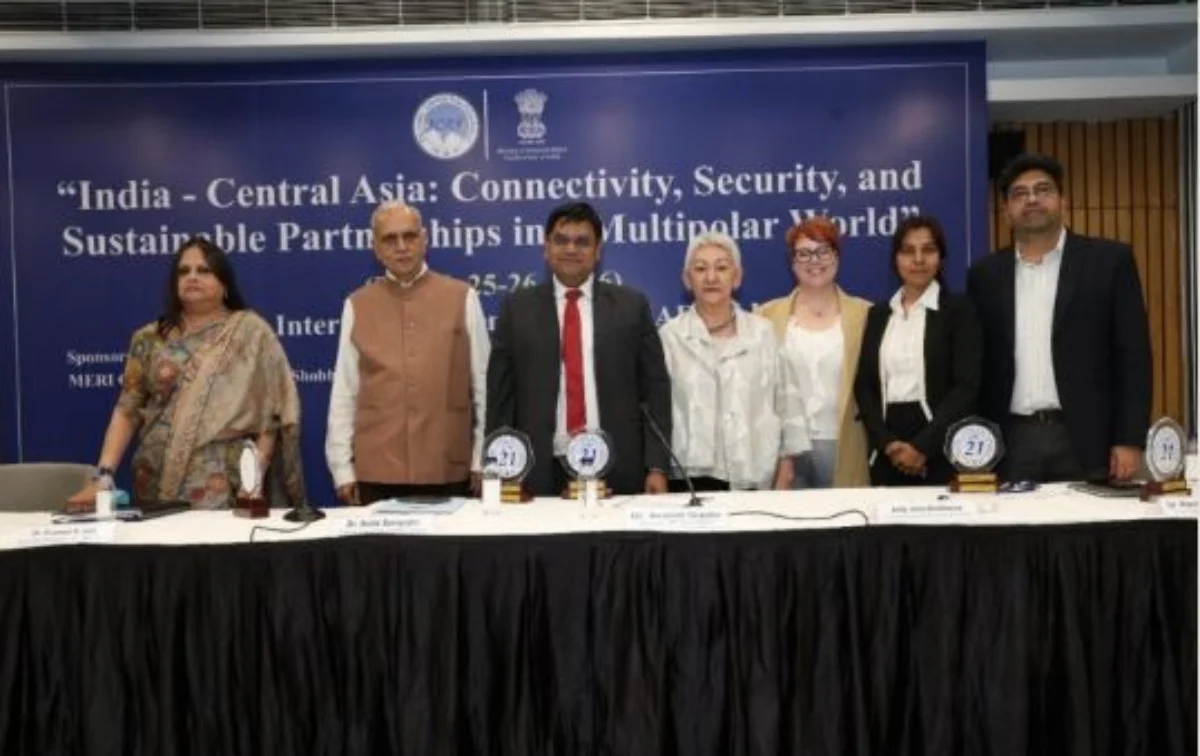
New Delhi, April 6, 2026: A widening conflict in West Asia is compelling India and Central Asian nations to reassess critical trade routes, diplomatic strategies, and regional security frameworks. Key infrastructure projects such as Iran’s Chabahar Port are now facing growing uncertainty, raising concerns over long-term investments and connectivity plans across Eurasia.
These challenges were at the center of discussions during a high-level conference held in New Delhi on March 25–26, titled India–Central Asia: Connectivity, Security, and Sustainable Partnerships in a Multipolar World. The event brought together policymakers, scholars, and regional experts, including representatives from The Times of Central Asia, to evaluate emerging geopolitical risks.
The conference unfolded against the backdrop of two major conflicts the Russo-Ukrainian War and the escalating tensions between Israel, the United States, and Iran. Participants agreed that the West Asia crisis is expanding rapidly, posing serious threats not only to ports and logistics corridors but also to global economic stability.
India’s strategic investment in Chabahar Port seen as a crucial link to Afghanistan and Central Asia is now considered high-risk. Experts warned that any disruption or destruction of this key project could erase years of progress, weaken regional partnerships, and derail efforts to establish alternative trade corridors such as the trans-Caspian route.
On the diplomatic front, discussions also touched upon India’s potential role in de-escalating tensions. However, S. Jaishankar made it clear during an all-party meeting on March 25 that India would not act as a mediator in the conflict. This stance drew mixed reactions among participants, though Central Asian nations broadly supported any peaceful diplomatic initiatives.
Amid rising instability, experts emphasized the urgent need to rethink traditional geopolitical approaches. Four key themes emerged during the conference: the risks of bloc politics, the growing influence of regional organizations, the prioritization of national interests, and a clear reluctance among countries to align with competing global powers.
Dr. Raj Kumar Sharma highlighted the importance of practical engagement over theoretical discussions. He noted that the presence of Central Asian ambassadors enabled meaningful dialogue focused on peace-building through sustained diplomacy, trade, and investment.
Despite the seriousness of the crisis, participants expressed cautious optimism that dialogue, restraint, and economic cooperation would ultimately guide outcomes. The conference concluded as a constructive step toward strengthening diplomatic efforts aimed at ensuring peace and stability in an increasingly volatile region.