
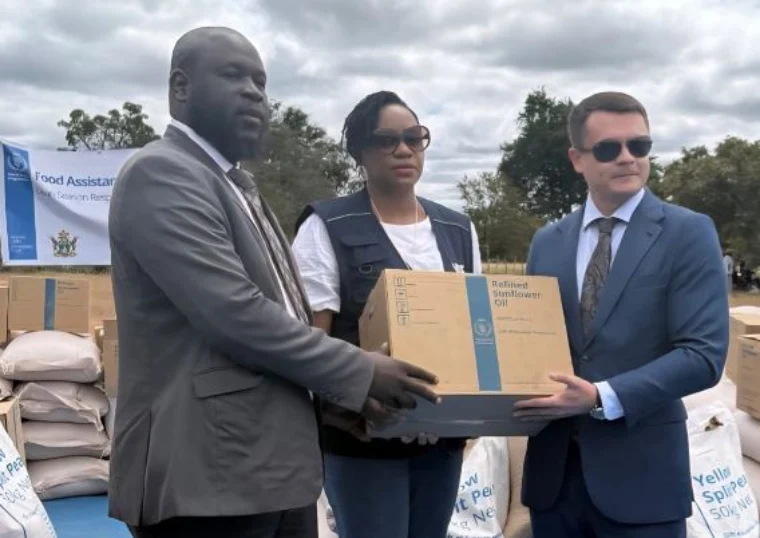
Russia: In a significant humanitarian gesture, Russia has provided essential food assistance to Zimbabwe as part of its contribution to the United Nations World Food Programme (WFP). The donation includes 117 tons of sunflower oil fortified with vitamins A and D, along with 352 tons of yellow split peas, aimed at supporting vulnerable communities facing food insecurity.
The aid package is expected to play a crucial role in improving the nutritional intake of thousands of people across Zimbabwe, particularly in regions grappling with drought, economic challenges, and limited access to balanced diets. The inclusion of vitamin-enriched sunflower oil highlights a focused effort to address malnutrition, especially among children and pregnant women, who are most at risk of deficiencies.
Officials from the World Food Programme emphasized that such contributions are vital in sustaining ongoing relief operations in southern Africa. Zimbabwe has faced recurring food shortages due to erratic weather patterns, including prolonged dry spells that have severely impacted agricultural productivity. In this context, international support remains essential to bridge the gap between food demand and supply.
Russia’s donation underscores its continued participation in global humanitarian initiatives and cooperation with multilateral organizations. By channeling its support through the WFP, Russia ensures that the aid reaches those who need it most through an established and efficient distribution network.
Zimbabwean authorities have welcomed the assistance, expressing gratitude for the timely support. They noted that partnerships with international donors and agencies are critical in strengthening food security and resilience against future crises.
The WFP, which operates in more than 120 countries, relies heavily on contributions from member states to carry out its mission of combating hunger and ensuring food access for vulnerable populations. Contributions like this not only provide immediate relief but also reinforce global solidarity in addressing one of the world’s most pressing challenges food insecurity.
As Zimbabwe continues its efforts to recover and stabilize its food systems, such international cooperation serves as a reminder of the importance of collective action in tackling humanitarian crises worldwide.